
How to Avoid Overdraft Fees Forever (The 2026 Playbook)
Americans paid $8B in overdraft fees in 2025 — an average of $34 per event. Every one of them was preventable. Here's the exact 4-step system to make sure you never pay another one.
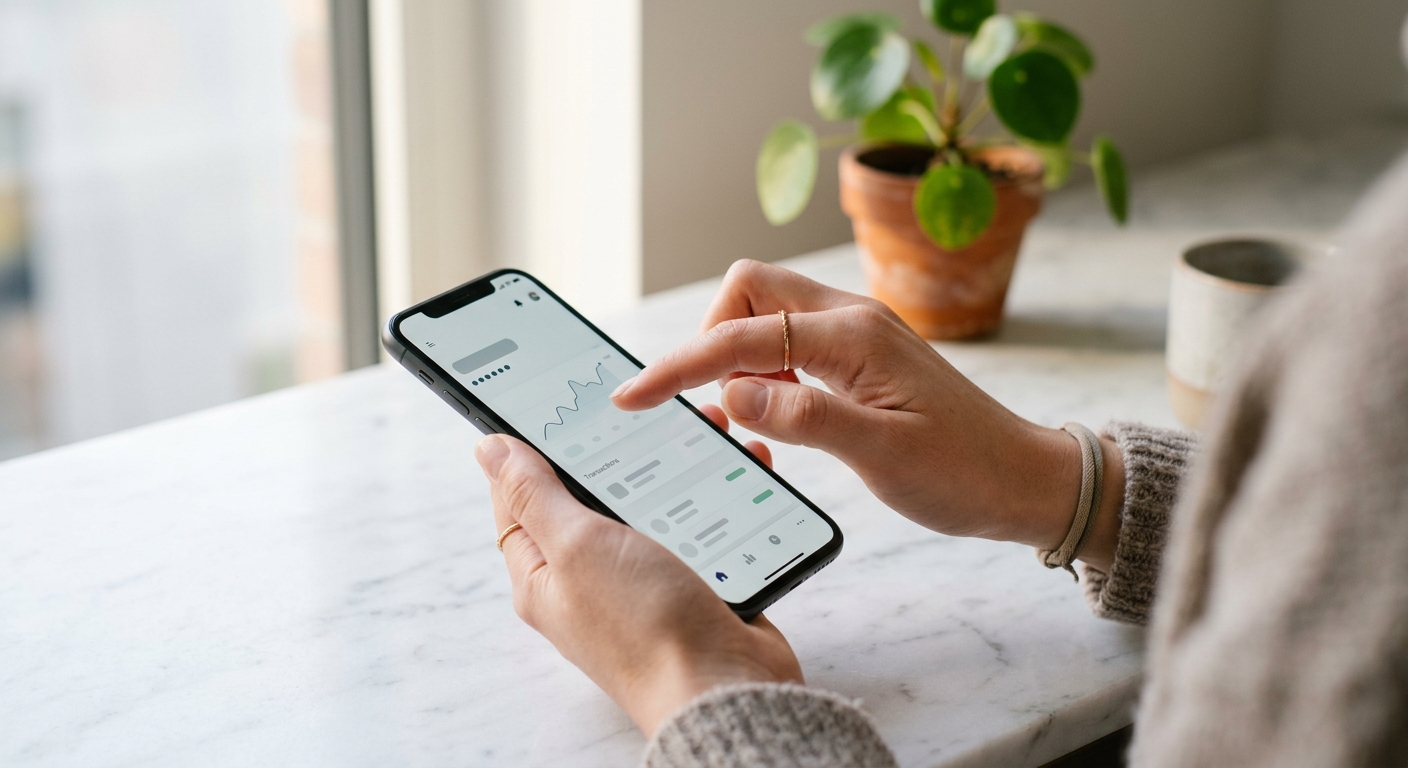
Why overdrafts happen (it's not you)
The average overdraft in the US isn't a wild spender's problem. It's a timing problem. Your rent hits Friday, your paycheck hits Saturday, and Thursday's grocery run pushed you $14 under. Your bank charges $34. You just paid ~2.4× your grocery bill in fees.
Banks make $8 billion/year on exactly this pattern. It works because your "available balance" doesn't know about tomorrow's rent.
Step 1 — See the real number
Your account balance lies. Not deliberately — but it shows you what's in the account right now, not what will be in the account after upcoming autopays.
Solutions:
- Use a Safe to Spend 365 app that subtracts upcoming bills for you.
- Or manually track: at the start of every week, subtract your next 14 days of scheduled bills from your checking balance. That's your true available.
If your true available is negative before your next paycheck, you have an overdraft coming — this week. Act now.
Step 2 — Build a $500 buffer
The single most effective anti-overdraft tactic is a cash cushion inside your checking account that you mentally treat as invisible.
Target: $500, which absorbs 95% of unexpected bill/timing mismatches.
Where to park it:
- In checking (the simplest option — but easy to accidentally spend)
- In linked savings with automatic overdraft transfer enabled (most banks — free — automatically pull from savings if checking dips)
- In a Safe to Spend 365 "protected buffer" that hides it from your daily-spending number
Step 3 — Switch to a no-overdraft bank
Several major US banks in 2026 have eliminated overdraft fees entirely:
| Bank | Overdraft policy |
|---|---|
| Ally Bank | No overdraft fees, ever. Free coverage up to $250. |
| Capital One 360 | Free overdraft protection, no fees since 2022 |
| Chime | SpotMe covers up to $200 in overdraft, no fee |
| Charles Schwab | Refunds overdraft fees automatically |
| Discover Cashback Debit | No overdraft fees since 2019 |
| SoFi | No overdraft fees on direct-deposit customers |
| Alliant Credit Union | Free overdraft transfer from savings |
If you're at Chase, BofA, or Wells Fargo, moving to one of the above is a 30-minute change that could save you hundreds per year.
Step 4 — Turn on real-time alerts
Set your bank app to alert you when checking hits a specific threshold. Suggested thresholds:
- Notification when balance drops below $300
- Notification when balance drops below $100 (urgent)
- Push notification on every deposit ≥ $500 (positive reinforcement)
Every major bank supports this. Turn them on in 5 minutes.
The "forever" test
You know you've solved this when you have:
- A daily "safe to spend" number that includes upcoming bills
- $500+ buffer sitting in checking or linked savings
- A bank that doesn't charge overdraft fees anyway
- Real-time alerts on your phone
Take an afternoon. Do all four. You're done.
How Safe to Spend 365 helps
Our app does step 1 automatically and gives you a "protected buffer" for step 2 — set it once, forget it, and the app makes sure you never accidentally spend into it. Download it free and be overdraft-proof in 5 minutes.
Ready to build on AtlasForge?
Get sandbox API keys in 60 seconds — or install the Safe to Spend 365 app.