
The 2026 Fintech Stack: Every SaaS Tool a Modern Fintech Uses
Every fintech we know runs roughly the same 45 tools by year 2. Here's the complete stack — what to buy, what to build, and where the money actually goes.
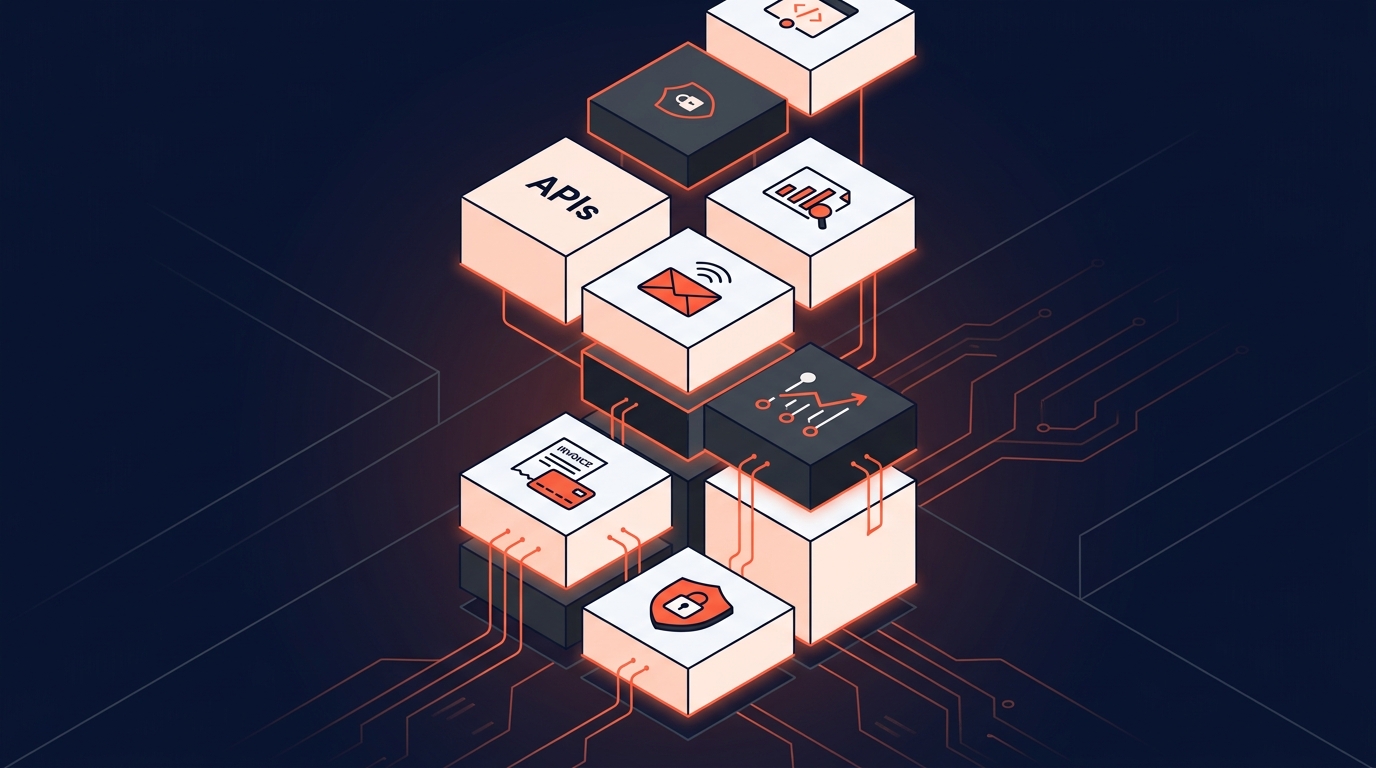
The 45 tools most fintechs run by year 2
Grouped by function, with approximate monthly cost at ~50-employee scale. Your mileage will vary; this is a directional map.
Core infrastructure
- AWS / GCP — cloud compute ($8–25k/mo)
- Cloudflare — CDN + WAF + Zero Trust ($500–2,000/mo)
- Datadog or Grafana Cloud — observability ($3–8k/mo)
- PagerDuty or Incident.io — incident management ($500–2,000/mo)
- Sentry — error tracking ($200–800/mo)
Data & analytics
- Snowflake or BigQuery — data warehouse ($3–15k/mo)
- dbt Cloud — data transformation ($500–3,000/mo)
- Airbyte or Fivetran — data ingestion ($500–5,000/mo)
- Looker or Metabase or Hex — BI ($500–3,000/mo)
- Segment — customer data platform ($1–5k/mo)
- Amplitude or PostHog — product analytics ($500–3,000/mo)
Payments & banking
- Stripe or Adyen — payments (our comparison)
- Plaid, MX, or Finicity — bank data (our comparison)
- Lithic, Marqeta, or Highnote — card issuing (our comparison)
- AtlasForge — derived-data layer (our platform)
- Wise or Airwallex — international treasury (variable)
Compliance & security
- Vanta or Drata or Secureframe — SOC 2 / compliance (our playbook)
- Alloy or Persona — KYC (our comparison)
- Middesk — business verification
- Okta or JumpCloud — SSO / identity
- 1Password or Bitwarden — password management
- Snyk or Semgrep — code security scanning
- Panther or Datadog Security — SIEM
Marketing & growth
- HubSpot or Attio — CRM
- Customer.io or Braze or Loops — lifecycle marketing
- Webflow — marketing site
- Common Room or Default — community/lead intelligence
- Ahrefs or SEMrush — SEO
- Ghost or Beehiiv — newsletter
Customer support
- Intercom, Front, or Zendesk — support platform ($1–8k/mo)
- Statuspage — public status page ($100–500/mo)
- Loom — video answers ($200/mo)
Product & design
- Figma — design ($200–1,000/mo)
- Linear or Shortcut — engineering tracking ($200–1,000/mo)
- Notion or Coda — docs ($200–800/mo)
HR / ops / finance
- Rippling or Gusto — payroll ($200–1,500/mo)
- Ramp or Brex — corporate card + expense
- Mercury — business banking
- Carta — equity management
- Every.io or Pilot — bookkeeping
- DocuSign or PandaDoc — contracts
- Perkbox or Compt — benefits
AI & assistance
- GitHub Copilot — developer autocomplete
- Claude, ChatGPT Team — general-purpose AI
- Cursor or Windsurf — AI IDE
- Perplexity — research
- Fathom or Otter — meeting notes
Approximate total spend
For a ~50-person fintech running most of the above:
~$65,000–$130,000/month in SaaS ($780k–$1.5M/year).
This is roughly 8–12% of a typical Series A fintech's total OpEx. Tools you can't cut, tools you can consolidate, and tools you can defer are the categories to review quarterly.
The 5 tools we'd keep if we could only keep 5
If I had to strip a fintech down to 5 SaaS tools and rebuild from there:
- AWS (or GCP) — cannot ship without cloud infra
- Vanta — cannot sell to enterprise without SOC 2
- Datadog — cannot debug production without observability
- Alloy or Persona — cannot legally onboard users without KYC
- Stripe — cannot make money without payments
Everything else is optimization, not survival.
Where AtlasForge sits in the stack
We're in the "banking & data derivation" layer — you connect your users via Plaid/MX, feed the raw transaction data into our API, and get back polished insights (Safe to Spend 365, cash flow, subscription detection) that your users see inside your product. See the Developer Docs.
Ready to build on AtlasForge?
Get sandbox API keys in 60 seconds — or install the Safe to Spend 365 app.